Astrocytic GLUT1 & glucose uptake
How altered glucose transport in astrocytes affects brain energy balance and contributes to neurodegeneration.
Exploring how astrocyte metabolism reshapes brain energy balance and contributes to Alzheimer's disease progression.
Alzheimer's disease is often understood as a disorder of neurons, amyloid-beta and tau. However, long before memory is lost, the brain undergoes profound metabolic changes. The SOLAS Lab investigates whether these early energetic alterations are not simply a consequence of neurodegeneration, but an active force driving the disease.
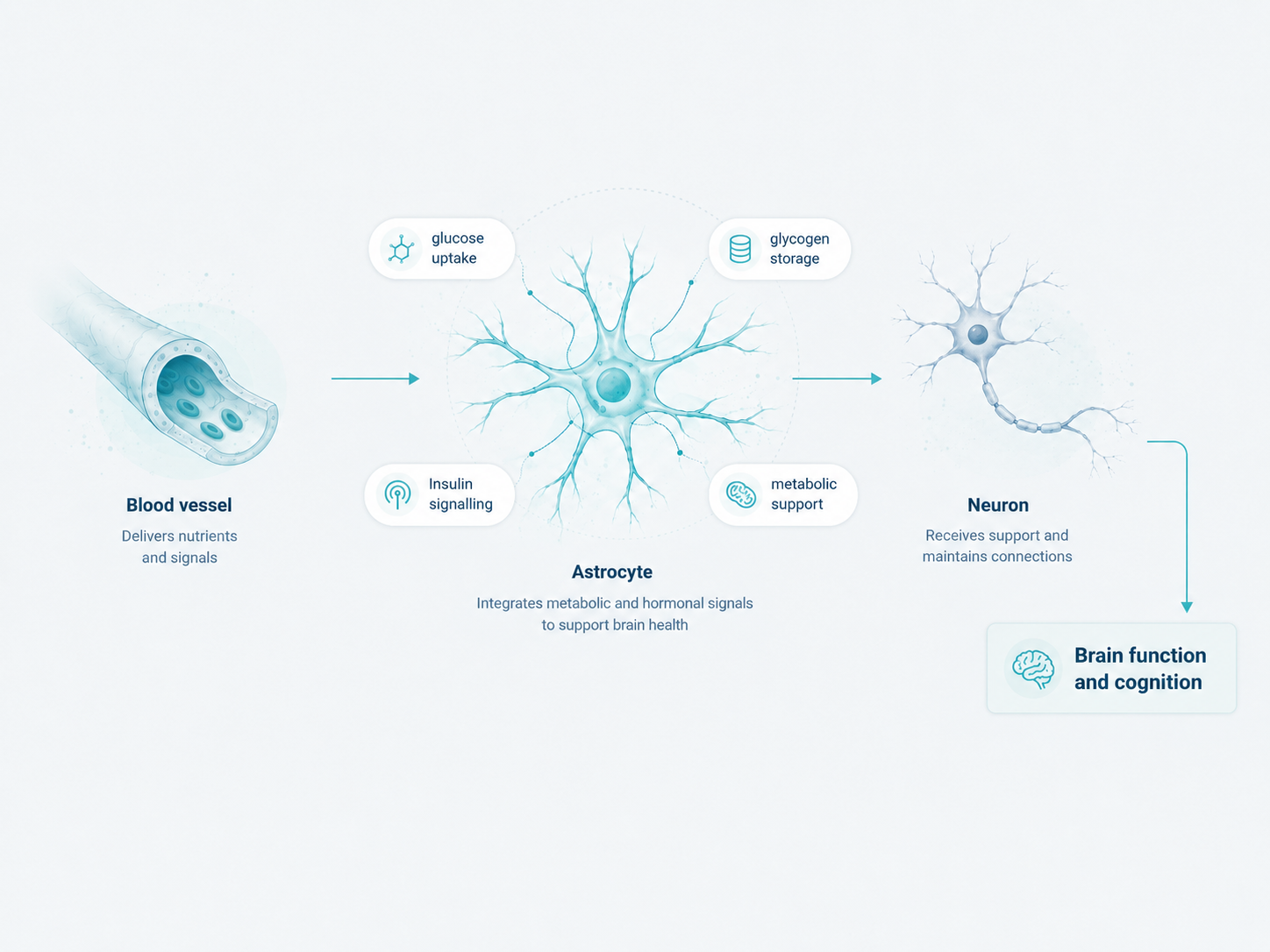
At the centre of our research are astrocytes: glial cells that support, protect and nourish neurons. Far from being passive support cells, astrocytes regulate glucose uptake, glycogen storage, insulin signalling, antioxidant defence and the metabolic dialogue between blood vessels and neuronal circuits. Their unique position at the interface between circulation and neurons makes them essential sensors and regulators of brain energy.
The SOLAS Lab connects three fields that are often studied separately: Alzheimer's disease, astrocyte biology and brain metabolism. Our goal is to shift the way neurodegeneration is understood — from a neuron-centred disorder to a multicellular metabolic disease in which astrocytes may hold a key to earlier diagnosis and intervention.
Astrocytes are central regulators of brain energy balance. They connect blood vessels with neurons, integrate metabolic and hormonal signals, and help maintain neuronal function by controlling glucose uptake, glycogen storage, insulin signalling and metabolic support.
Because of this strategic position, astrocytes may sense metabolic dysfunction early and play an active role in Alzheimer's disease progression — making them a compelling target for both early biomarkers and therapeutic strategies.
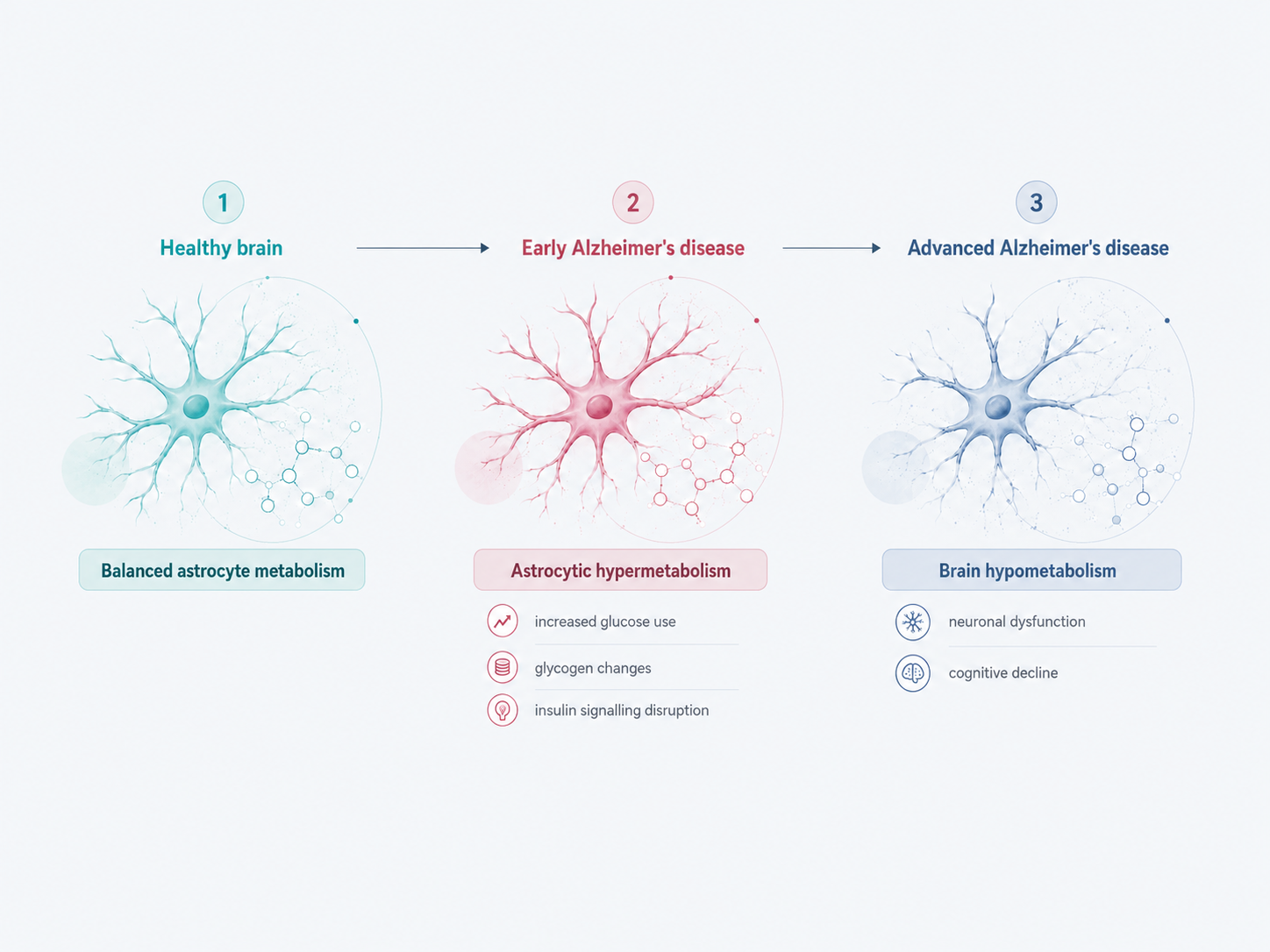
Our work proposes that, during the early stages of Alzheimer's disease, astrocytes undergo metabolic reprogramming. This response may initially help the brain adapt to stress, but over time it can become maladaptive, contributing to neuronal hyperexcitability, neuroinflammation, oxidative stress and cognitive decline.
In particular, we explore the possibility that an early astrocytic hypermetabolic state precedes the hypometabolism typically observed in advanced Alzheimer's disease — opening a critical window for intervention.
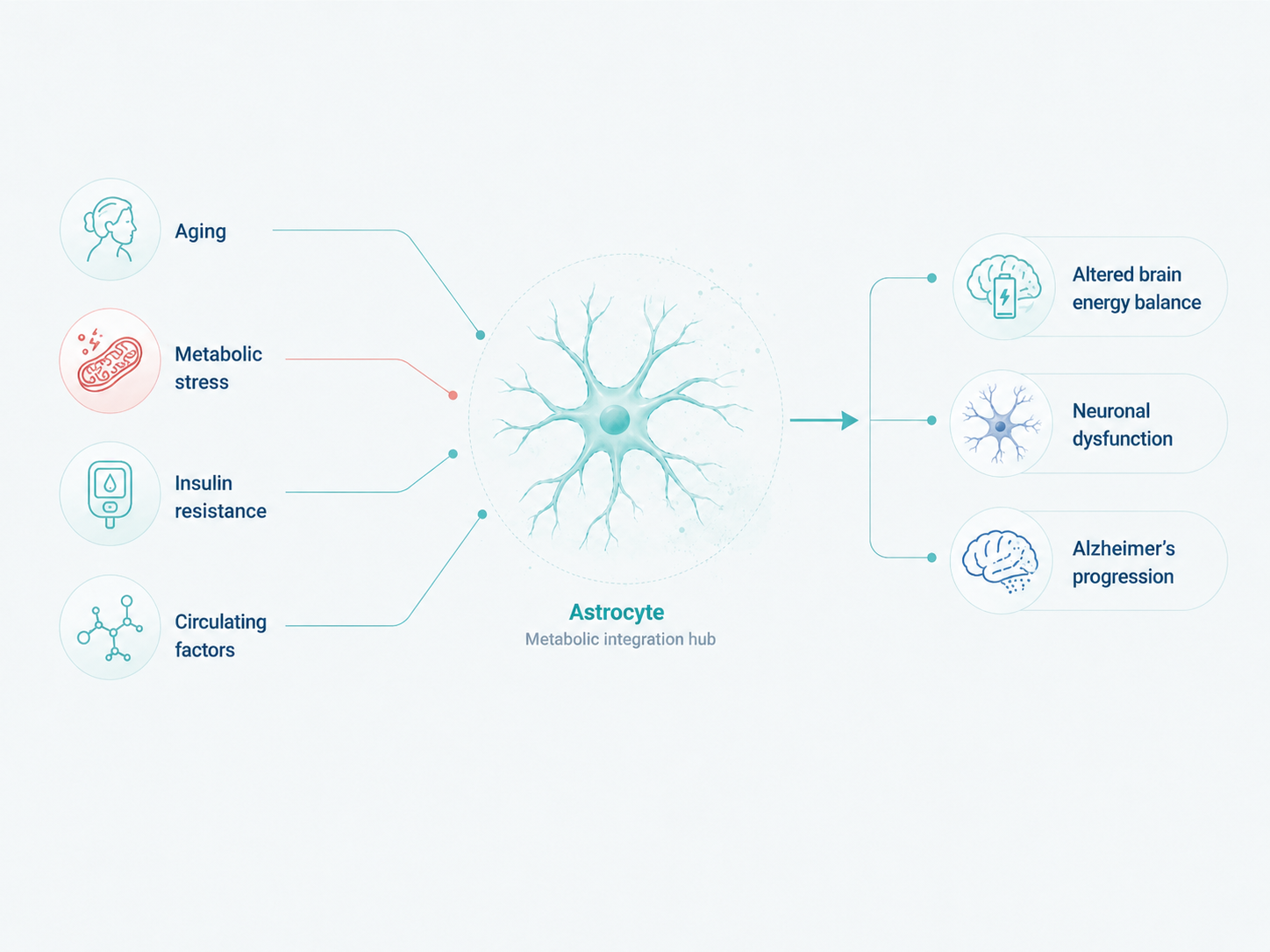
Alzheimer's disease does not develop in isolation within neurons. Aging, metabolic stress, insulin resistance and circulating factors may all influence how astrocytes regulate brain energy balance.
We investigate how these systemic signals are integrated by astrocytes and how this may contribute to neuronal dysfunction and disease progression — placing the disease in its full biological context.
Our projects explore complementary aspects of astrocyte metabolism in Alzheimer's disease, from mechanisms and biomarkers to therapeutic strategies.
How altered glucose transport in astrocytes affects brain energy balance and contributes to neurodegeneration.
Whether astrocytes enter an early hypermetabolic state before the hypometabolism observed in advanced Alzheimer's disease.
Identifying metabolic changes in brain tissue, cerebrospinal fluid and blood that may reveal disease before symptoms appear.
Developing new therapeutic approaches by targeting astrocyte metabolism and related signalling pathways.
Understanding how impaired insulin signalling in astrocytes disrupts energy homeostasis and accelerates disease progression.
By integrating animal models, human samples, spatial transcriptomics, brain activity imaging, metabolic analyses and behavioural studies, we aim to define how altered astrocyte metabolism contributes to disease onset and progression. This approach may reveal early biomarkers and identify new therapeutic targets based on restoring brain energy balance.
By placing astrocytes at the centre of Alzheimer's disease research, the SOLAS Lab aims to uncover mechanisms that emerge before overt neurodegeneration. Our goal is to transform early metabolic alterations into new biomarkers and therapeutic opportunities that help protect brain function before memory loss becomes irreversible.